Responsible tourism can be difficult to judge from a website. Almost every safari company can describe itself as sustainable, ethical, or eco-friendly. What matters is what those commitments look like in practice.
At Sababu Safaris, this idea has been part of our philosophy from the beginning.
Sababu means “purpose” or “cause” in Swahili, and our approach to Travel With Purpose is about creating unforgettable experiences for our guests while making sure tourism also benefits the people, wildlife, and places that make those experiences possible.
That depends on choices like who you travel with, where your money goes, how communities benefit, how wildlife is treated, and how you reduce your environmental impact.
In this guide, we’ll explain what responsible tourism looks like in Tanzania and how you can make those choices count.
What Is Responsible Tourism in Tanzania?

Responsible tourism means considering the impact your trip has on the places and people you visit — and making choices that increase the benefits while reducing unnecessary harm.
That matters particularly in Tanzania, where tourism supports a huge network of people, from safari guides and camp staff to farmers, craftspeople and other local suppliers.
The fees paid by visitors to national parks and conservation areas also contribute to protecting the landscapes and wildlife.
But tourism can create pressures, too. Wildlife can be disturbed by irresponsible viewing practices, popular destinations can become crowded, remote camps consume water and energy, and cultural experiences can become more about entertaining tourists than meaningful interaction.
Choose Who You Travel With Carefully

Look beyond the word “responsible”
Don’t be afraid to ask a safari company what terms such as responsible, ethical, or sustainable mean in practice.
Look for specifics:
- Does the company employ Tanzanian guides and staff?
- How does it choose the camps it recommends?
- Can it tell you which community or conservation initiatives it works with?
- Does it have a clear approach to animal welfare?
Specific examples are much more useful than a sustainability statement.
Think about where your money goes
Going on safari in Tanzania doesn’t necessarily mean all the money you spend remains in Tanzania.
International ownership can mean some of the money paid for tours and accommodation ultimately leaves the country. Choosing locally based operators and businesses can help more of that spending circulate within Tanzania.
A safari guide spends their salary locally; a camp buys produce from suppliers; employees support their families.
Sababu is based in Tanzania and works with local guides, businesses, and communities.
Make Sure Local Communities Benefit From Your Trip

Responsible tourism should create opportunities for the people who live in the places you visit.
But simply adding a village visit to your itinerary doesn’t necessarily achieve that. It matters who organizes the experience, how local people are involved, and where the money you spend ultimately goes.
Choose cultural experiences carefully
The best cultural experiences should feel like an exchange rather than a performance put on for tourists. Look for experiences where communities are involved in deciding how visitors are welcomed and have an opportunity to benefit directly from tourism.
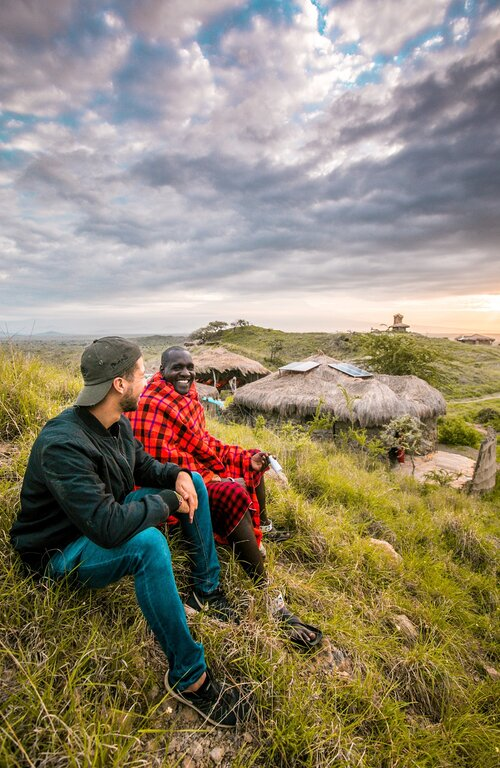
This is the approach Sababu takes to its Maasai community visits. Rather than stopping at the commercialized villages found along some of Tanzania’s main tourist routes, we take guests to more remote communities where they can spend meaningful time with the people who live there.
You might visit a family home, learn about Maasai traditions, or head into the bush with a Maasai warrior to learn how plants are used for food and medicine.
The same principle applies elsewhere in Tanzania. Sababu can arrange opportunities to spend time with Hadzabe hunter-gatherers near Lake Eyasi or cook and share a meal with a local family in Zanzibar.
Support projects that respond to genuine needs
Sababu also gives travelers opportunities to support projects in the communities they visit.
One example is the distribution of solar lights to families without reliable access to electricity. Sababu works with Solar Sister, an organization that supports women entrepreneurs selling clean-energy products in underserved communities.
Guests can also help distribute water filters, providing families with access to cleaner drinking water without relying on single-use plastic bottles.
If you have spare space in your luggage, you can also use it to bring useful supplies to donate to community projects in Tanzania.
Sababu participates in Pack for a Purpose, an initiative that helps travelers find out what local organizations need before they leave home and depart for Tanzania. Sababu can advise you on suitable items to bring, such as school and art supplies, sports equipment, and first-aid supplies.
This means you’re responding to a specific local need rather than simply donating items you assume will be useful.
Choose Responsible Safari Camps and Lodges

Words such as eco-lodge can sound reassuring, but the label itself tells you very little. Look instead at how a property operates and how it interacts with the environment and communities around it.
Some useful questions to ask include:
| Look for | Why it matters |
|---|---|
| Local employment and suppliers | Helps tourism spending support jobs and businesses in Tanzania. |
| Renewable energy | Solar and other renewable sources can reduce reliance on fossil fuels in remote locations. |
| Responsible water use | Water can be scarce in some safari areas, making careful management particularly important. |
| Waste management | Remote camps need effective systems for managing and removing waste. |
| Fewer single-use plastics | Reduces unnecessary waste in sensitive natural environments. |
| Community partnerships | Provides evidence that neighboring communities share in the benefits of tourism. |
| Conservation programs | Look for specific projects and partnerships rather than broad claims about supporting wildlife. |
By choosing properties that manage energy, water, and waste responsibly while supporting conservation and local communities, we can play a part in promoting sustainable tourism practices across Tanzania.
These concrete practices are much more revealing than whether a lodge describes itself as “green.”
You can find more advice in our guide to booking a sustainable African safari.
Keep Wildlife Wild

Seeing animals such as elephants, lions and chimpanzees in the wild can be one of the highlights of visiting Tanzania. Responsible wildlife tourism starts with making sure our desire to get close to them doesn’t come at their expense.
Avoid exploitative animal encounters
A useful rule is that wild animals shouldn’t need to perform, pose, or tolerate being handled for us to enjoy them.
Be wary of attractions offering elephant rides, opportunities to pet lion cubs, wildlife feeding, or photographs where visitors hold or pose closely with wild animals. What appears to be an extraordinary encounter can depend on training, restraint or other treatment that isn’t visible to tourists.
The word “sanctuary” isn’t a guarantee either. Before visiting a wildlife facility, find out why the animals are there, whether they can eventually be returned to the wild, and whether direct contact with tourists forms part of the business model.
Read our guide to supporting wildlife conservation in Tanzania for more advice.
Give animals space on safari
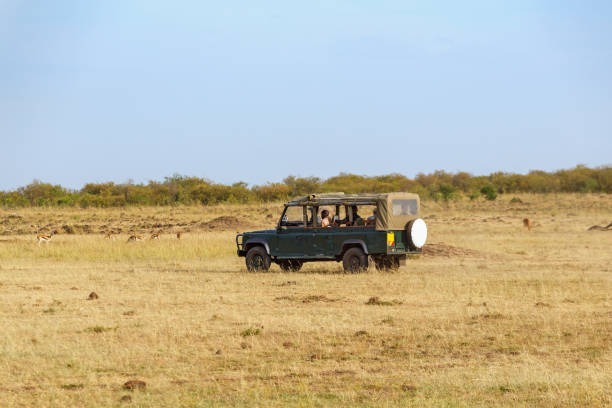
Getting too close to wildlife can cause stress and disrupt natural behavior, particularly when vehicles crowd, follow, or pursue an animal for a better view.
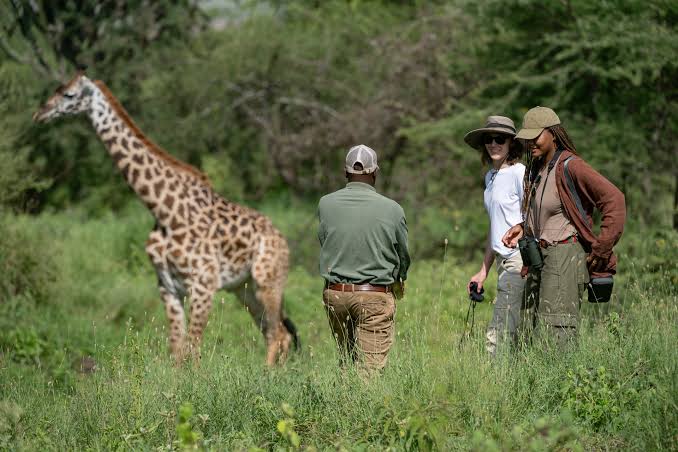
Sababu’s guides are trained to read an animal’s behavior and judge how close a vehicle can approach without causing distress.
If an elephant becomes agitated or an animal is feeding, hunting, or caring for young, responsible guiding may mean keeping your distance — even if that means giving up the photograph you hoped to take. You can help by keeping noise down, following your guide’s instructions, and using binoculars or a long camera lens rather than asking to move closer.
Reduce the Environmental Impact of Your Trip

A safari in Tanzania inevitably has an environmental footprint. International flights and safari vehicles burn fuel, while camps in remote locations need energy, water, and supplies.
Sustainable travel means recognizing those impacts and looking for practical ways to reduce them.
The camps you choose can make a difference. Look for properties that use renewable energy, manage water carefully, minimize waste, and reduce their reliance on single-use plastics. Small choices during your trip matter too, particularly in remote areas where waste and wastewater can be more difficult to manage.
Sababu has eliminated disposable plastic water bottles from its safaris. Instead, we carry larger refillable water containers and provide guests with reusable aluminum bottles.
We also recommend bringing biodegradable toiletries, as wastewater may ultimately return to the surrounding environment in some remote camps.
None of these measures makes a safari impact-free. But choosing operators and camps that can show how they’re reducing their environmental footprint — and following their guidance while you’re there — can help reduce the unnecessary impact of your trip.
Think About Where You Travel
Where you choose to go can also influence the impact of your trip. Tanzania’s most famous destinations attract large numbers of visitors, concentrating both the benefits of tourism and its pressures in the same places.
That doesn’t mean you should avoid the Serengeti or Ngorongoro. The tourism industry provides vital income for these protected areas and the communities and businesses around them. But if you want to explore farther afield, adding less-visited destinations can help spread tourism income more widely and reduce pressure on the most popular parks, contributing to a more sustainable future for tourism in Tanzania.
Sababu recommends considering places such as Ruaha, Katavi and Mahale, where visitor numbers are much lower than in the more popular parks of northern Tanzania.
Your trip can support camps, guides and other businesses in areas that receive a smaller share of Tanzania’s tourism income, while giving you the chance to experience some extraordinary wilderness away from the country’s busiest safari routes.
Travel With Purpose With Sababu

Our Travel With Purpose approach is integral to every safari we plan. That means looking for opportunities to make a positive impact that fit naturally into your itinerary and reflect the things you care about.
If you’re interested in meeting local people, for example, we can recommend community experiences where your visit provides a genuine benefit.
If conservation is particularly important to you, we can help you understand how the places you visit and the camps you stay at contribute to protecting Tanzania’s diverse wildlife and wild spaces.
You don’t need to work out which projects, communities, or organizations to support before you arrive.
Get in touch, tell us what matters to you, and we’ll use our local knowledge to build those choices into a tailor-made safari that works for you.